
Have Trowel, Will Travel
By Betsy Alexander
When Charles Platt created “The Moorings” for the Alger’s, he continued the Italian Renaissance theme that he’d employed for the design of the villa outdoors, melding the landscape and architecture into one. Platt replicated here what he saw in the ancient Italian gardens he’d studied and painted for years: lots of herbaceous greenery, large shrub plantings, grapevine-draped pergolas, pools, and the utilization of the existing mature trees and shrubs already on the property. He also planted some color to pop in the summer months: pink and white anemones, larkspur, tulips, and some hearty lilies. But southeast Michigan hasn’t the Mediterranean climate of Florence nor the temperate of Venice, so an Italian garden in Grosse Pointe is lesser than in old Italy.
Once the family took up residence in 1910, avid gardener Marion Alger made good use of the greenhouse on their property, and her gardener. She was very hands-on and botanically knowledgeable; she knew what she wanted for her gardens and what she felt she still wanted augmented. Like most women, Marion wanted flowers, particularly roses: more color, fragrance, and an air of romance versus mostly greens.
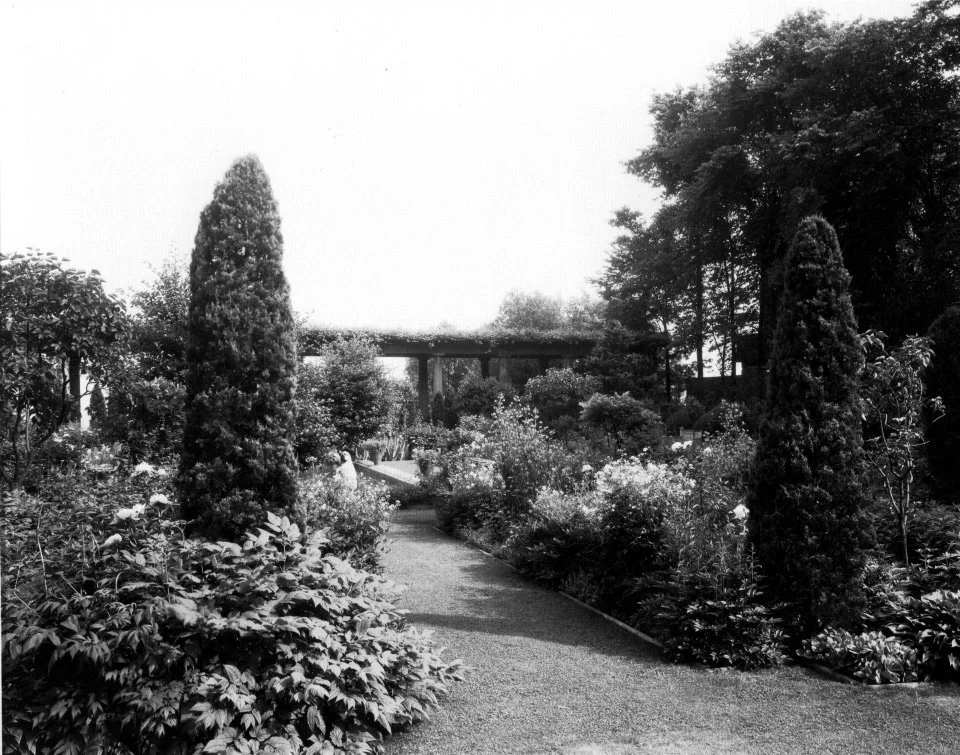
Charles Platt’s Alger Pool Garden
By 1919, Marion – with Platt’s full blessings - had landscaper Ellen Biddle Shipman rework the “entrance court and small pool garden” he’d designed. She installed tea rose standards amid two types of lilies, white Japanese anemone, columbine, two types of monkshood, delphinium, gas plant, cotoneaster, fruit tree standards, lots of irises and tulips, many varieties of peonies, various perennials, and smaller ornamental shrubs. She softened the edges of Platt’s beds and went for a more Gertrude Jekyll type “overplanted” look. Her goal was to not only link the garden to the surrounding landscape but simultaneously make the gardens more private as outdoor rooms. Shipman’s other “must” for her commissions was to plant for all four seasons, so her gardens always had something of interest visually for the client.
Shipman and Platt were longtime friends and neighbors turned gardening associates from their artist colony days up in Cornish, New Hampshire, so reworking his designs were not problematic. The pair had first collaborated loosely in 1913, with Platt mentoring her. They soon had a relationship patterned closer to that of the legendary British team of Edwin Lutyens and Gertrude Jekyll as Ellen quickly came into her own as an in-demand landscaper.
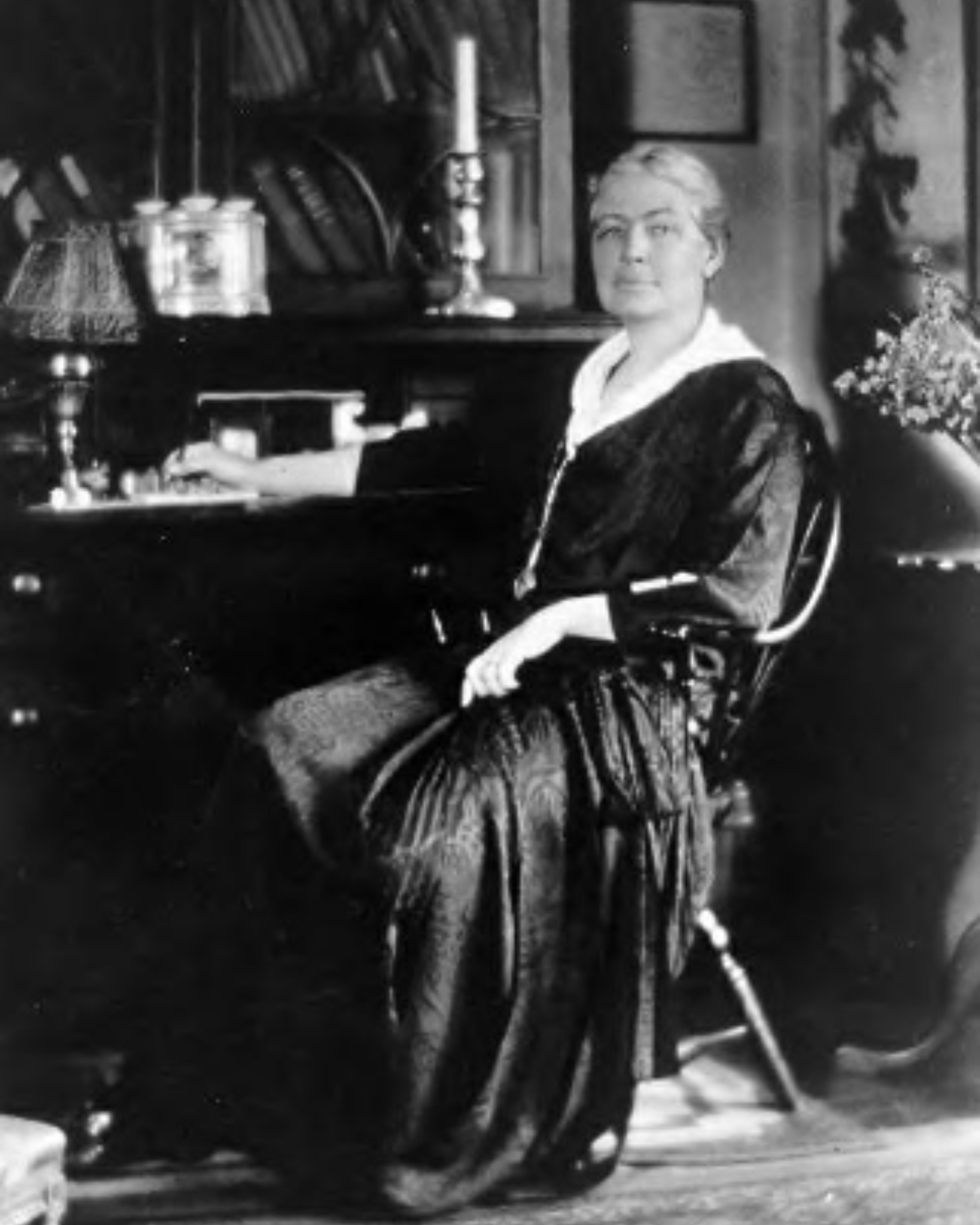
Ellen Biddle Shipman
Ms. Shipman’s Alger commission was the first official one of some 43 landscaping projects in the Grosse Pointes. On occasion she was hired to supplement or reshape another landscape architect’s original vision, but most of the commissions here were 100% her own. A few of her other local gardens were for Mary Alger (“Flying D Farm” & “By Way”); Caroline (Alger) Shelden (“Deeplands”); Anna (Dodge) Dillman (”Rose Terrace II”); Mrs. John S. Newberry (“Lake Terrace” & “Lone Hill Farm”); Mrs. Truman Newberry (“Drybrook”); along with gardens for Fay (Alger) Miller, Mrs. Dexter Ferry, Mrs. Murray Salas, Mrs. Joseph Schlotman, Mrs. Ernest Kanzler, Mrs. Roy Chapin, the Grosse Pointe Club, and a host of other prominent Grosse Pointe names with astonishing estates. Shipman also was commissioned by the Pointes to landscape the entirety of Lake Shore Road in 1932. Unfortunately, all of her original local gardens are non-extant including most of the Lake Shore Road willows, flowering shrubs, crab apple and plum trees she planted.
Marion and Ellen became very close friends until the latter’s death in 1950. Ms. Shipman stayed at “The Moorings”, “Starboard Cottage” the Alger residence up in York Harbor, ME during the 1926 landscaping install, and Marion’s later residence at 242 Provencal Road in Grosse Pointe Farms while doing the property and just visiting. Marion was known to organize events around Shipman’s stays, with garden and floral competition judging, lectures to women’s organizations, fetes, and other like activities as the groundbreaking female landscaper was nationally famous in addition to being very well liked here. A single mother, Ellen employed only women staff, took no nonsense from competitors in a male-oriented field, and made every clients’ garden a stunning showcase – of course women adored her! Confidence and reputation firmly secure, Shipman even expanded into architecture later in her career ala her mentor, Charles Platt.
Once “The Moorings” was deeded to the Detroit Institute of Arts and opened in May of 1936, Marion again turned to Ellen to remove the formal gardens of the former Alger residence for better museum foot traffic and maintenance. In continual consultation with Marion, Shipman created the beloved knot gardens beginning in 1937 and into 1938. Marion paid for the landscaping change even though she had gifted away her estate, a financial tradition she continued once it became The Grosse Pointe War Memorial in March of 1949. She no longer lived here or owned it, but 32 Lake Shore Road always held her gardens.
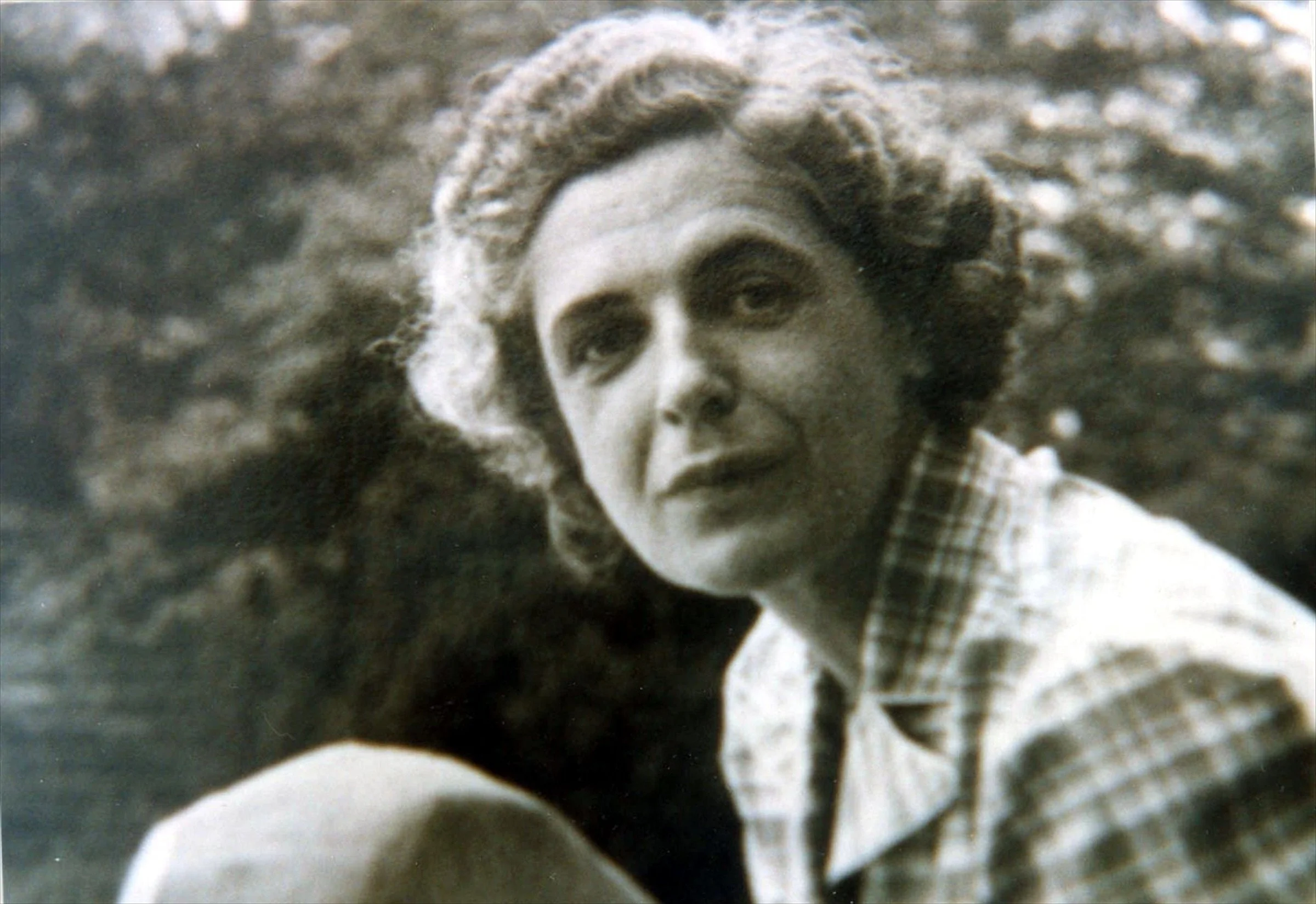
Marion Alger
In 1950, Marion created the Grosse Pointe Garden Center, a 501c3 with the mission to “promote education, beautification, horticulture, and conservation in our community” through community projects and programs. One of her first declarations was that the Garden Center would have the use of her spacious upstairs bedroom/bathroom suite in the southeast corner of the Alger mansion as their headquarters. Their 1000-book library of botanical and gardening titles, many donated by the acclaimed Detroit author/artist/floral arranger Esther Longyear Murphy, were housed there. The room was staffed by Garden Center volunteers; on-hand daily to answer any horticultural questions the community might have. In 1952, the Garden Center designed and installed the Trial Gardens, followed by the perennials’ gardens, and much later the Veterans Gardens. Their meticulous care and command over the spectacular lakefront gardens dazzle visitors every spring until hard frost - truly a must-see.
Marion was involved with The Grosse Pointe War Memorial Association as a lifetime board member, but she was also as connected to the landscaping as when she lived here. If she was not pleased with something she saw outdoors, or the quality or quantity of the freshly cut flowers indoors, she would make her opinion known for immediate correction. However, if any garden-related repairs, resodding, plant replacement, hardscape, redesign, or the like needed attention, Marion gladly financed it.
Marion’s last big labor of love was overseeing the build of the William Fries Auditorium from 1960-1962. Both Mrs. William (Nina) Fries and Marion jointly signed off on the planning, final design, and furnishings, with Marion also taking her usual interest in how the knot gardens and pergola column design blended the new with the pre-existing.
Marion Alger attended the public unveiling of the Fries Auditorium before passing away exactly two weeks later at her winter home in Boca Grande, Florida on December 16, 1962. She was a woman who sought to instill visual beauty to the places she cherished while she gave her all to her beloved Grosse Pointe community.
Credits: Thanks to Judith B. Tankard (The Gardens of Ellen Biddle Shipman)
Photos: Ellen Biddle Shipman (Public Domain); Marion Alger & Charles Platt’s Alger pool garden (TWM)